
The Definitive Compendium of Peruvian Birds: An Odyssey from Amazonia to the Peaks

South America is universally recognized as the “Bird Continent,” a sprawling landmass that ignites the passion of naturalists across the globe with its sheer density of avian life. Yet, within this continental expanse, one nation asserts itself as the undisputed sovereign of ornithology: Peru. For dedicated twitchers, students of evolutionary biology, and those who simply appreciate nature’s grandeur, the staggering abundance of Peruvian birds turns a standard holiday into a transformative expedition.
Boasting a national registry that documents more than 1,800 confirmed species, Peru claims the honor of hosting nearly 20% of the entire planet’s avian population. This figure is far more than a dry statistic; it serves as living proof of the nation’s unparalleled geographical intricacy. Spanning from the windswept, arid shores of the Pacific to the serrated, glaciated summits of the Andes, and descending into the sultry, emerald expanse of the Amazon Rainforest, every slice of elevation and microclimate provides a bespoke sanctuary. This guide beckons you to delve into the existence, environments, and habits of the winged masters that command these horizons.
The Tectonic Cradle of Life: Deciphering the Variety
To truly grasp why the roster of Peruvian birds is so astronomically diverse, one must first consult the cartography. Peru is a nation defined by intense juxtapositions. It is a vertical realm where a traveler can traverse from the ocean’s edge to 6,000 meters in elevation and plummet back to 200 meters within a span of mere days.
The master builder of this biological richness is the Andes Mountain Range. Functioning as a colossal geological backbone, the Andes bifurcate the country, carving out secluded valleys where distinct species have followed independent evolutionary paths over eons. To the west, the icy Humboldt Current surges northward from Antarctica, chilling the coastline and generating a desert biome that, despite its aridity, supports a surprising wealth of seabirds. Conversely, the eastern slopes act as a barricade against the trade winds, capturing humidity and birthing the verdant cloud forests that eventually merge into the immense Amazon Basin.
This collision of topography and meteorology constructs a “speciation engine.” It guarantees that an expedition to Peru is never confined to a single ecosystem. It is a voyage through a kaleidoscope of biomes, each inhabited by a specialized community of Peruvian birds that have adapted to distinct, and frequently severe, environmental parameters.
1. The Andean Cock-of-the-rock: The Neon Phantom of the Cloud Forest
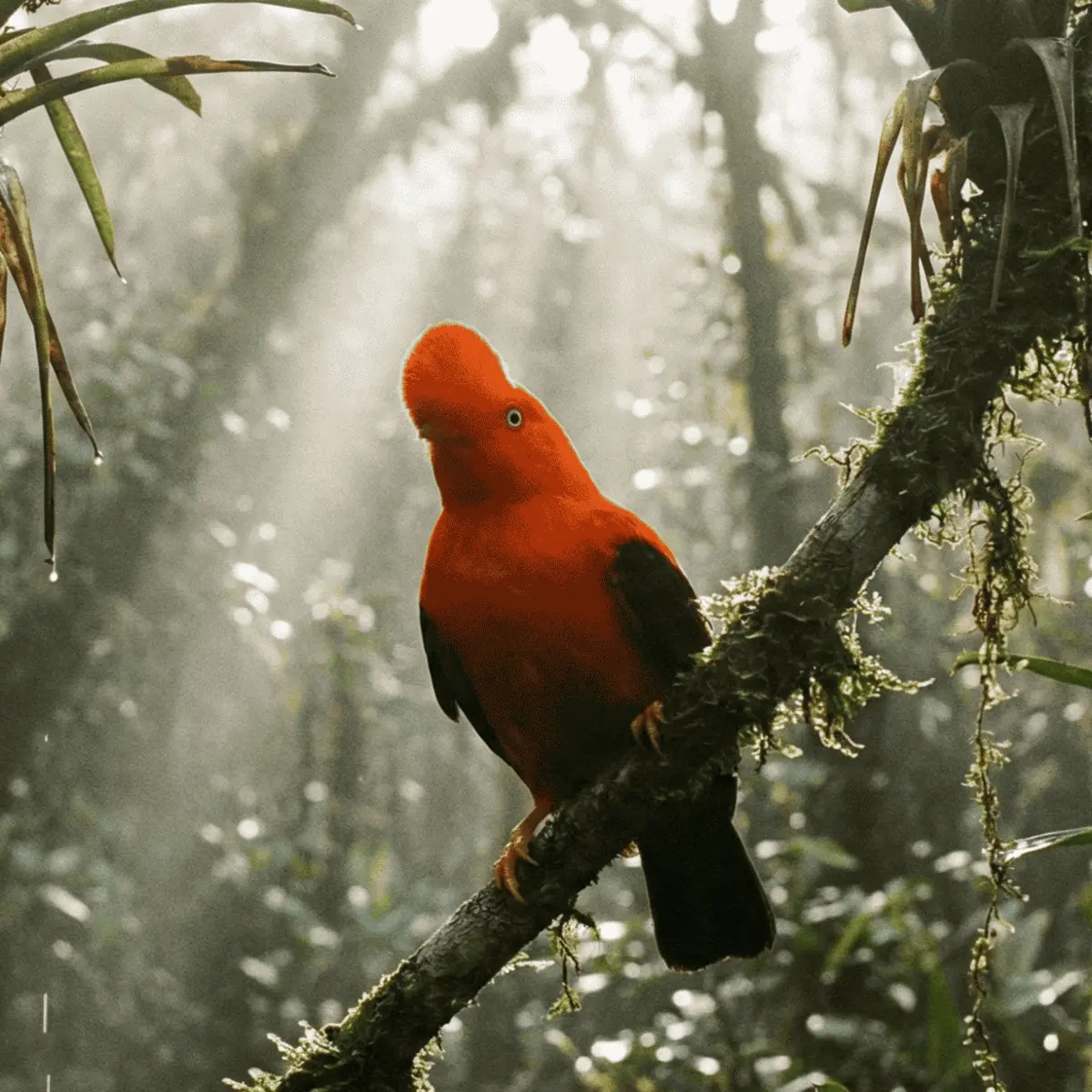
Sequestered within the mist-shrouded montane forests, located at elevations ranging between 500 and 2,400 meters, dwells an entity that resembles a creature from mythology rather than a biological specimen. The Andean Cock-of-the-rock (Rupicola peruvianus) reigns as the National Bird, a designation it secures through pure visual magnetism and charisma.
The Spectacle of the Lek
While the females possess a cryptic, rust-brown plumage—an adaptation ideal for camouflage within nesting caves—the males are an electric, fluorescent orange. Their most defining characteristic is a disk-shaped crest of feathers that permanently obscures their beak, granting them a profile that is entirely unique among Peruvian birds.
However, it is their conduct, rather than their appearance alone, that attracts voyagers to the cloud forest. Males assemble in communal performance arenas known as “leks.” Here, the jungle floor transforms into a theater. Multiple males congregate to execute an intricate choreography, bounding between branches, bowing, snapping their wings, and producing low, guttural vocalizations. When a female descends to evaluate the suitors, the frenzy intensifies. This exhibition is a raw, kinetic contest for genetic supremacy, providing human spectators with a direct view of the mechanics of sexual selection.
Seeking the Phantom
The Cock-of-the-rock is most readily observed within the Manu Biosphere Reserve (along the celebrated Manu Road) or in the vicinity of Tarapoto in the north. Safeguarding these Peruvian birds necessitates the preservation of the cloud forest, a vital watershed that functions as a transitional buffer between the highlands and the Amazonian lowlands.
2. The Andean Condor: The Shadow Over the Canyons
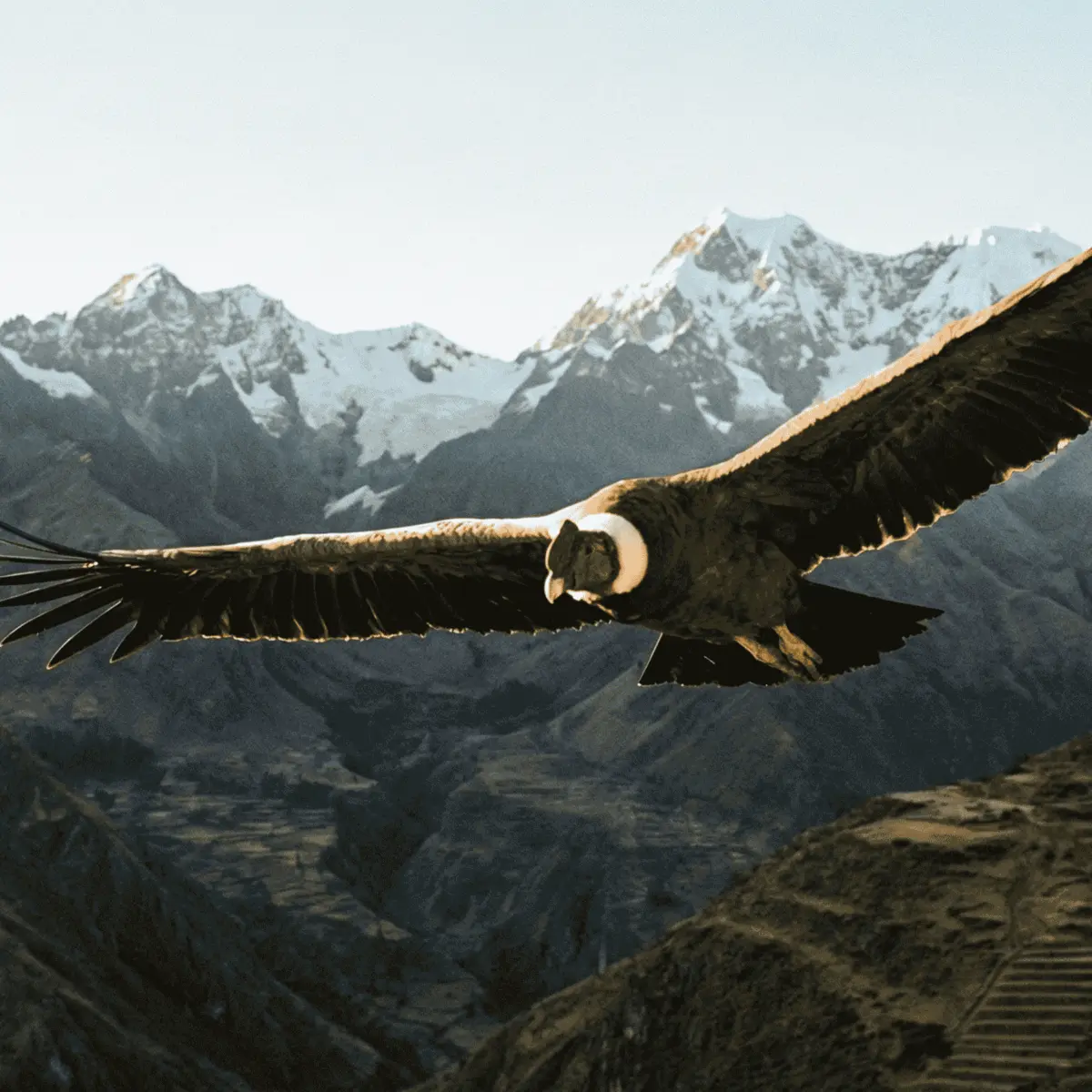
While the Cock-of-the-rock commands the dense undergrowth, the rarefied air of the high altitudes is the domain of the Andean Condor (Vultur gryphus). With a body weight reaching 15 kilograms and a wingspan exceeding 10 feet, the Condor stands as one of the most massive flying creatures on the planet. In Andean cosmology, this titan was venerated by the Inca civilization as a hallowed messenger, serving as a spiritual bridge connecting the terrestrial realm with the celestial.
A Study in Aerodynamics
Unlike smaller Peruvian birds that are forced to flap incessantly to remain airborne, the Condor is a master glider. It depends on thermal updrafts—pillars of heated air ascending from profound canyons—to secure altitude. A Condor is capable of traversing hundreds of miles in a single day with barely a flutter of its wings, scouring the terrain for carrion.
Observing a Condor ascend from the abyss of the Colca Canyon or the Cotahuasi Canyon is a live demonstration of physics. As the morning sun heats the canyon precipices, the birds relinquish their hold on the cliffside roosts and step into the empty space, engaging the air currents with effortless elegance.
The Fragility of a Giant
Despite their imposing stature, Condors are precarious. Their reproductive rate is sluggish, as they rear only a single chick every two years. Furthermore, they confront perils from poisoning and the encroachment of human development. Conservation initiatives are currently active, tagging and tracking these colossal Peruvian birds to ensure they continue to monitor the Andean summits for posterity.
3. The Marvelous Spatuletail: The Hummingbird with Four Feathers
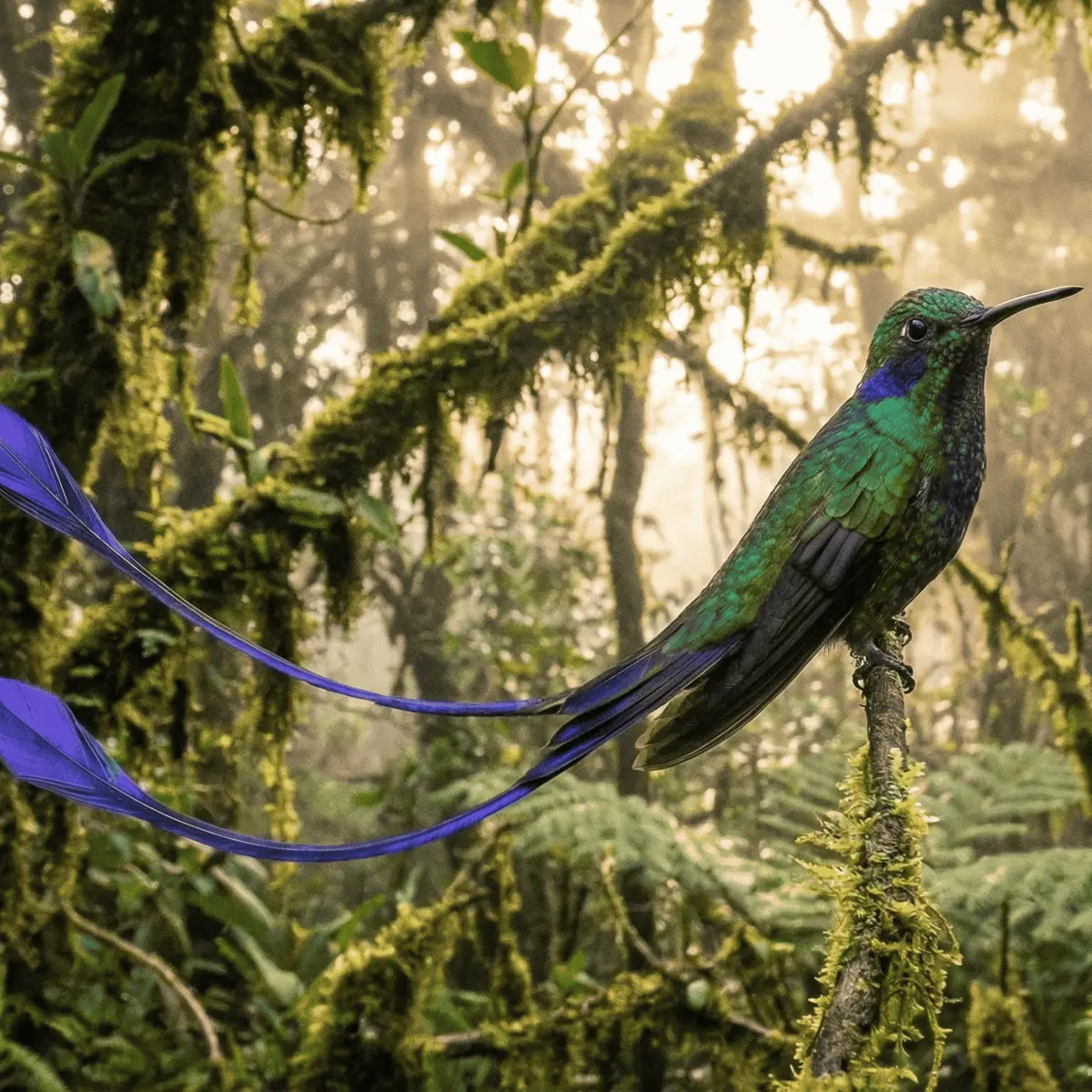
If the Condor epitomizes magnitude and strength, the Marvelous Spatuletail (Loddigesia mirabilis) embodies fragility and evolutionary extravagance. Restricted to a diminutive, fragmented zone in the Rio Utcubamba valley of northern Peru, this hummingbird is an endemic jewel. It exists nowhere else on Earth, rendering it a “Holy Grail” discovery for ornithologists.
The Mechanics of Allure
The male Spatuletail wields one of the most eccentric tail configurations in the avian kingdom. He possesses a mere four tail feathers. The outer pair are elongated, wire-thin filaments that terminate in large, violet-blue discs, or “spatules.” These feathers are independently mobile. During the courtship ritual, the male hovers before a female and whips these heavy spatules around his body in a frenetic, clicking ballet.
Given the immense caloric energy required for hummingbirds to sustain hovering flight, the addition of weight and drag via these tail feathers appears biologically counter-intuitive. Nevertheless, this serves as a prime illustration of the runaway selection frequently observed in Peruvian birds, where the imperative to captivate a mate supersedes the requirement for energy efficiency.
Safeguarding a Micro-Niche
Due to its exceedingly compact range, the Spatuletail is classified as Endangered. Local communities, identifying the economic potential of avitourism, have commenced the planting of specific red-flowering Alabaster bushes upon which the birds depend. Visiting the Huembo Reserve directly supports these community-driven conservation endeavors.
4. Macaws: The Technicolor Sentinels
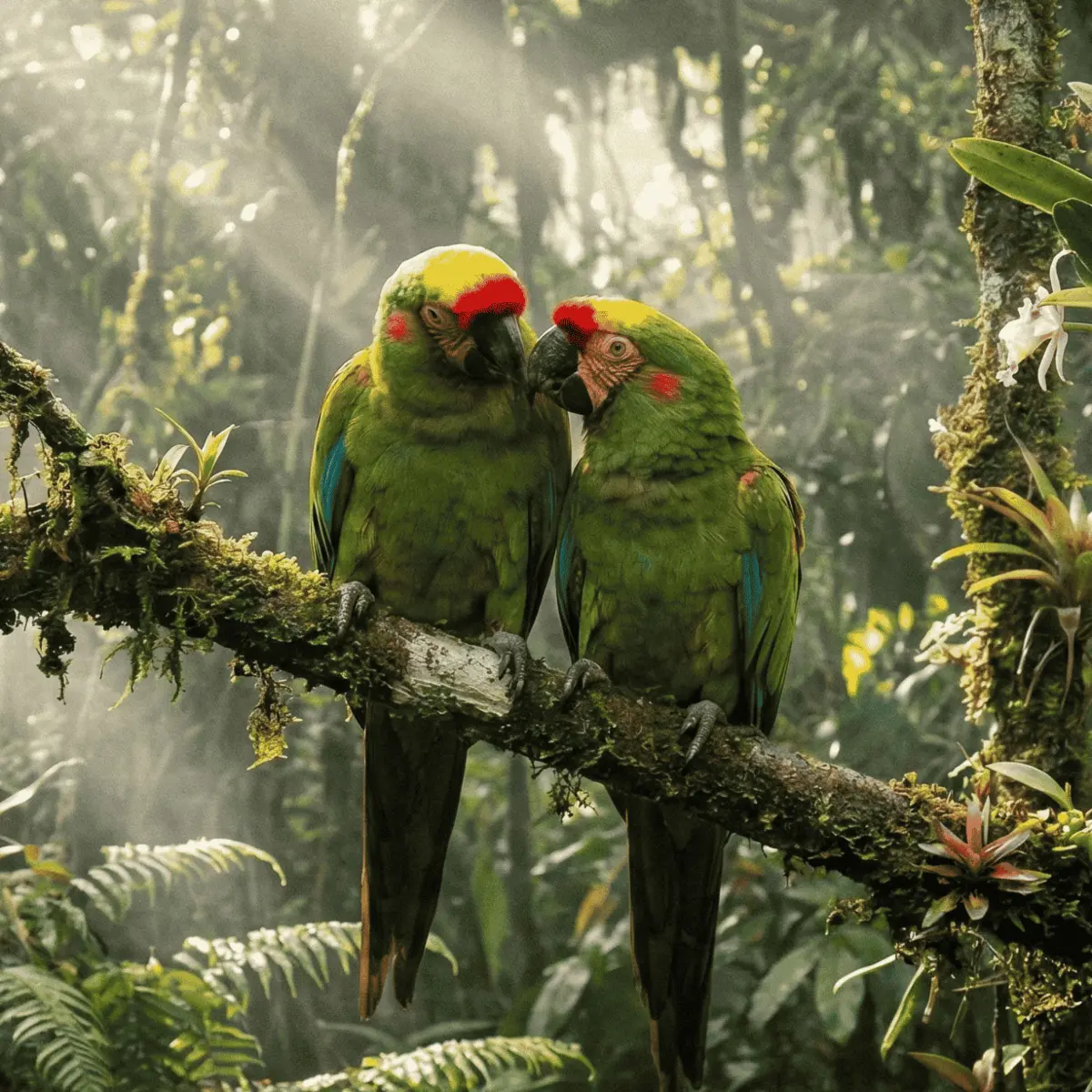
Descending the eastern gradients of the Andes, the crisp mountain air dissipates, superseded by the heavy, moisture-laden blanket of the Amazon Rainforest. Here, the canopy detonates with pigment. The Red-and-Green Macaw and the Scarlet Macaw represent the loudest and most flamboyant of the Peruvian birds occupying the lowlands.
The Enigma of the Clay Licks
While Macaws are stunning in flight, the true phenomenon unfolds at the collpas, or clay licks. In districts such as Tambopata and Manu, towering cliffs of exposed riverine clay entice hundreds of parrots and macaws each dawn.
The scientific community has deliberated on why these birds participate in geophagy (soil consumption). The dominant hypothesis is twofold: the clay supplies vital sodium absent from their diet, and it may assist in neutralizing toxins present in the unripe seeds and fruit they ingest. Witnessing a “macaw wave” descend upon a clay lick is a sensory deluge; the atmosphere vibrates with the raucous cries of hundreds of Peruvian birds and a swirling vortex of red, azure, emerald, and yellow plumage.
Amazonian Icons
Macaws are profoundly intelligent, communal entities that pair for life. Their formidable beaks are engineered to fracture the most resilient Brazil nuts. Regrettably, their aesthetic appeal marks them as targets for the illicit pet trade. Ecotourism performs a critical function here; when local residents can generate income by guiding travelers to observe wild Macaws, they are less inclined to engage in trapping or timber extraction.
5. The Andean Flamingo: The Alchemists of the High Salt Lakes

When one imagines flamingos, the mind often conjures images of tropical Caribbean lagoons. However, three distinct species of flamingos reside in the high Andes, with the Andean Flamingo (Phoenicoparrus andinus) being the scarcest. These Peruvian birds flourish in the Altiplano, a high-altitude tableland situated more than 3,000 meters above sea level.
Persistence in the Brine
The lakes of the Altiplano are frequently hypersaline and caustic, environments that would prove lethal to most life forms. The Andean Flamingo, however, has evolved to filter-feed on the microscopic algae and diatoms that proliferate in these waters. Their distinctive yellow legs and black-tipped wings distinguish them from their cousins.
Historically, the flamingo is inextricably woven into the fabric of Peru’s identity. Legend dictates that the red and white hues of the Peruvian flag were inspired by a flock of flamingos taking wing, a sight beheld by the liberator José de San Martín. Thus, these Peruvian birds are not merely biological organisms; they are national emblems.
A Delicate Balance
Climate change presents a grave danger to the wetlands (bofedales) where these flamingos forage. As glaciers retreat and precipitation patterns become erratic, the fragile hydrological balance of the high Andes is destabilized. Protecting these high-altitude wetlands is imperative for the survival of the flamingo and the indigenous communities that depend on these water reserves.
6. The Torrent Duck: Surfers of the Whitewater

Departing the stagnant saline lakes, we shift our focus to the tumultuous rivers that slice through the Andean slopes. Here resides the Torrent Duck (Merganetta armata), a species that has mastered one of the most physically punishing environments conceivable.
Hydrodynamic Engineering
The Torrent Duck is a specialized aquatic navigator adapted to existence in rapid, stone-filled rivers. Equipped with a streamlined fuselage, powerful webbed feet, and a rigid tail utilized as a rudder, they traverse Class IV and V rapids with nonchalance. It is a surreal experience to observe these Peruvian birds swimming upstream against a current that would submerge a human, casually plunging into the foam to extract stonefly larvae from submerged boulders.
The Sentinel of the Stream
Torrent Ducks are strictly territorial and monogamous. Crucially, they serve as bio-indicators of riverine health. They demand crystalline, highly oxygenated water to hunt. If a river is contaminated by mining runoff or heavy sedimentation resulting from deforestation, the Torrent Ducks vanish. Consequently, spotting one of these Peruvian birds in the Sacred Valley or near Machu Picchu is a testament to a healthy ecosystem.
7. The Burrowing Owl: The Desert Watchman
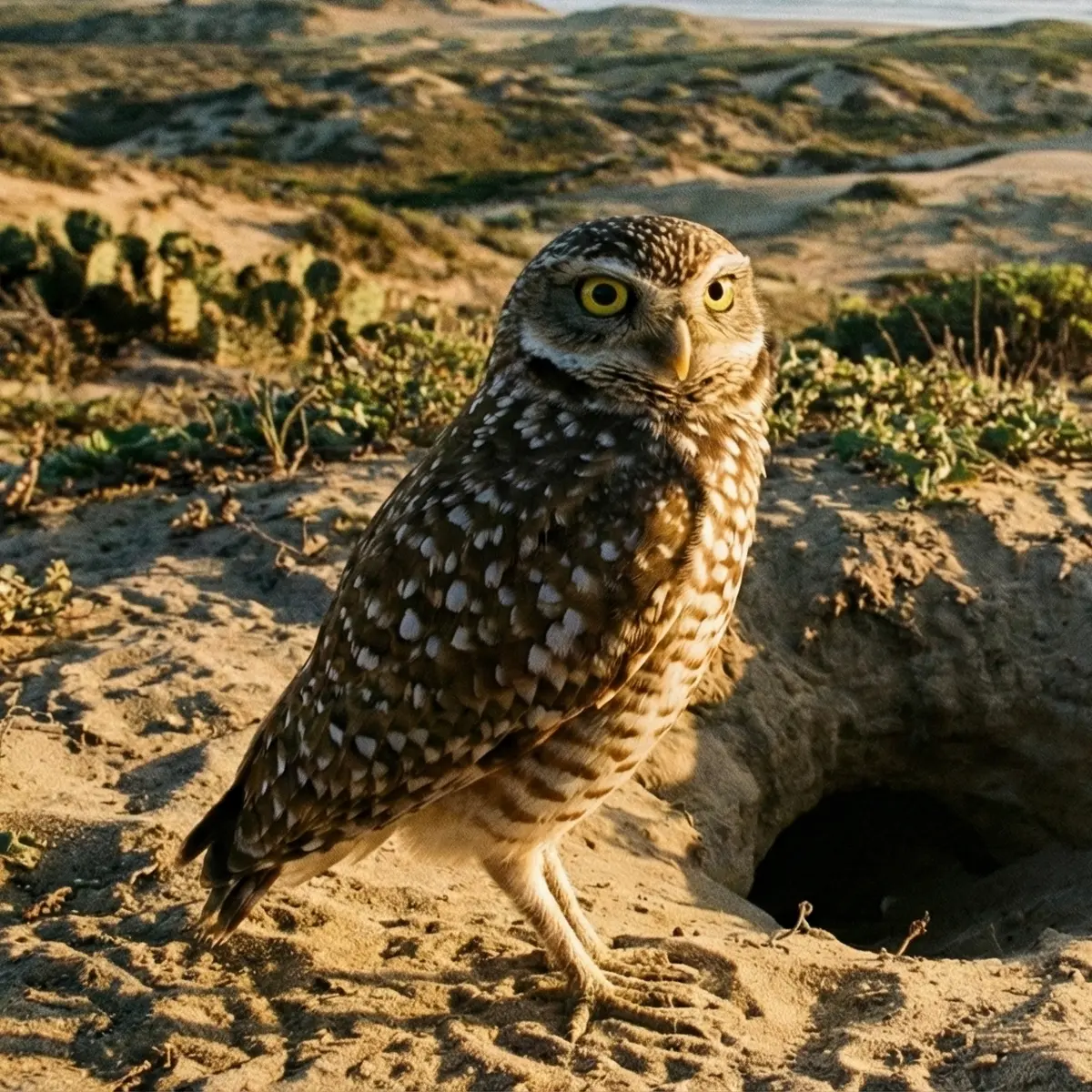
Finally, we return to the arid coast to encounter a bird that has learned to coexist with humanity: the Burrowing Owl (Athene cunicularia), known locally as the Huerequeque. Unlike the reclusive owls of the deep forest, these are active during the daylight hours and are among the most charismatic of all Peruvian birds.
Architects of the Sand
As their nomenclature suggests, these owls reside beneath the earth. In the soft substrates of the coastal desert, they excavate their own tunnels or commandeer burrows abandoned by mammals. They are frequently observed standing sentry on mounds of soil, bobbing their heads in a comical fashion when approached.
They have adapted with remarkable success to the expansion of urban areas. It is not unusual to locate Burrowing Owls residing in archaeological compounds, golf courses, or university campuses in Lima. They function as natural pest control agents, hunting beetles, rodents, and small reptiles. Their capacity to flourish in semi-urban settings underscores the resilience of Peruvian birds in the face of a rapidly transforming world.
Birding Routes: Navigating the Avian Highways
Given the colossal scale of the nation, birders typically segment Peru into three primary circuits. Comprehending these routes is essential to maximizing your checklist of Peruvian birds.
The Northern Route
This circuit is renowned for its elevated rate of endemism. It traverses the Andes at a lower altitude than the south, generating unique habitats. Primary targets here include the Marvelous Spatuletail and the Long-whiskered Owlet. This trajectory carries you through the Marañón Valley, frequently referred to as the “Grand Canyon of South America,” which acts as a barrier generating unique species on opposing banks.
The Central Route
Commencing in Lima, this route ascends the steep central highway into the high Andes. It is intense and attains dizzying altitudes rapidly. It is the premier route for sighting high-altitude specialists such as the Diademed Sandpiper-Plover. The diversity diminishes as you ascend, but the rarity of the Peruvian birds discovered here increases.
The Southern Route
This is the most heavily trafficked tourist circuit, encompassing Cusco, Machu Picchu, and the Manu Road. It provides the classic cross-section of habitats: from the high Andes down to the Amazonian lowlands. This route delivers the highest volume of species, including the Cock-of-the-rock, Macaws, and mixed Tanager flocks. For a novice visitor desiring to witness a high quantity of Peruvian birds, the Southern Route is the optimal selection.
The Economic Power of Avitourism
The preservation of these species is no longer merely a biological imperative; it is an economic necessity. Birdwatching tourism, or avitourism, has evolved into a substantial source of revenue for Peru.
When a traveler invests thousands of dollars to visit a rainforest lodge, that capital supports local personnel, purchases local agricultural produce, and funds the maintenance of the reserve. This establishes a value chain where a living tree harboring a Harpy Eagle nest is worth exponentially more than the timber it would yield if felled.
Communities that previously relied upon slash-and-burn agriculture are transitioning to eco-tourism. They are training as specialized guides who can identify Peruvian birds by a single chirp or a flash of pigment. This shift is vital for sustainable development. It empowers local populations to become the stewards of their own territory, ensuring that the biodiversity of the Amazon and Andes remains intact for future generations.
Practical Tips for the Aspiring Birder
If this guide has motivated you to prepare your luggage, here are some pragmatic tips to ensure you extract the most from your pursuit of Peruvian birds.
1. Timing Your Expedition
While Peru is a year-round destination, the transition months (May and September) often provide the optimal equilibrium of weather. The Amazon is best visited during the dry season (May to October) to circumvent muddy trails. However, avian activity is often elevated at the onset of the rainy season when fruits are blossoming.
2. Essential Equipment
You do not require a camera with a massive lens to appreciate the wildlife, but a high-quality pair of binoculars is non-negotiable. 8×42 or 10×42 magnification is ideal for the low light of the rainforest. A field guide is also indispensable. Birds of Peru by Schulenberg is the definitive text, though it is hefty. Many birders now utilize mobile applications that contain audio recordings of calls, which are vital for identifying Peruvian birds in dense foliage.
3. The Value of a Guide
Do not attempt to bird the Amazon or the deep Andes in isolation. The environments are vast and can be hazardous for the unprepared. More importantly, professional local guides are incredibly skilled. They possess “laser eyes” and can detect a green parrot against green leaves instantly. Hiring a guide also ensures that your tourism dollars flow directly to the people who know and protect these Peruvian birds.
4. Ethical Observation
With the proliferation of digital photography, ethical birding is more critical than ever. Avoid using “playback” (broadcasting recorded bird songs) excessively, as this stresses the birds and distracts them from feeding or mating. Never approach a nest too closely. The welfare of the animal must always supersede the perfect Instagram shot. We are guests in their home; we must tread lightly.
Conclusion: A Symphony of the Skies
Peru is far more than merely Machu Picchu and ceviche. It is a living, breathing museum of natural history. From the bone-dry deserts of the coast to the steaming jungles of the east, the country offers a masterclass in adaptation and survival.
The Peruvian birds we have explored—the flamboyant Cock-of-the-rock, the soaring Condor, the rare Spatuletail, and the resilient Burrowing Owl—represent just a minuscule fraction of the life that saturates this land. Each species narrates a story of the landscape it occupies. To observe them is to witness the pulse of the ecosystem.
Whether you are a “lister” obsessively checking off species, or a traveler who simply locates joy in the flash of a wing, Peru welcomes you. The skies here are alive. So, bring your binoculars, bring your curiosity, and look upward. The Peruvian birds are waiting to reveal the world from a different perspective.
BLOG HOME